What DeFi credit scores mean in 2026
DeFi credit scores represent a fundamental shift from collateral-only lending to reputation-based borrowing. In 2026, these scores allow borrowers to access better rates and unsecured loans by proving repayment history on-chain, reducing reliance on over-collateralization.
Previously, accessing capital in decentralized finance required locking up significantly more value than the loan amount. A DeFi credit score changes this dynamic by evaluating a wallet's financial behavior and reliability based on on-chain activity. This creates a pseudonymous identity that lenders can trust without knowing the user's real-world identity.
This system mirrors traditional credit reporting but operates transparently on the blockchain. Just as on-time payments and low credit utilization matter in 2026 traditional scoring models, consistent repayment of on-chain loans builds a positive DeFi credit score. This history becomes a portable asset, accessible across different protocols and chains.
The result is a more efficient capital market where good borrowers are rewarded with lower costs and greater access, independent of their current wealth.
How protocols calculate on-chain credit history
DeFi credit scores function as algorithmic representations of a wallet's financial behavior, replacing social security numbers with pseudonymous addresses. Unlike traditional models that rely on static snapshots, these systems evaluate the entire transaction history of a wallet to determine reliability. Your on-chain activity becomes your resume, where every swap, loan repayment, and liquidity provision adds a layer of verifiable trust.
The core mechanics mirror traditional FICO factors but apply them to immutable blockchain data. On-time payments remain the strongest signal of creditworthiness. Protocols track whether you repay loans exactly when due, without relying on grace periods or late fees. This consistency builds a reputation that travels with your wallet across different lending platforms, creating a portable identity that no single institution controls.
Trended data and utilization rates provide the nuance that static scores lack. Instead of just checking your balance today, algorithms analyze spending and borrowing patterns over months or years. They look for trends: are you borrowing more aggressively, or are you steadily paying down debt? Low utilization—keeping borrowed amounts small relative to your collateral—signals prudent management. This historical depth allows lenders to see beyond a single moment, identifying borrowers who maintain stability even during market volatility.
The result is a dynamic risk profile that updates in real time. As you interact with decentralized finance, your score adjusts based on fresh data. This immediacy allows lenders to offer better terms to users who demonstrate consistent responsibility, effectively rewriting borrower identity through code rather than credit bureau reports.
Top DeFi credit score platforms compared
Selecting the right infrastructure depends on which blockchain ecosystem you operate in and how granular your risk assessment needs to be. While traditional credit bureaus rely on identity verification, DeFi credit score platforms derive reputation from on-chain activity. The three dominant providers—ChainAware, Spectral, and DeFiScore—each solve this problem with distinct architectural approaches.
ChainAware focuses heavily on cross-chain data aggregation. It is designed for protocols that need a unified view of a user’s financial history across multiple networks. By treating data as a utility, it allows lenders to assess risk without requiring users to migrate assets to a single chain. This makes it particularly useful for multi-chain lending protocols.
Spectral operates as a specialized credit protocol rather than just a data provider. Its scoring model is deeply integrated into its own lending markets, creating a closed-loop system where good behavior directly unlocks better borrowing terms. Spectral’s model is robust for Ethereum-based users but less flexible for those operating in the broader multi-chain DeFi landscape.
DeFiScore takes a consumer-facing approach, offering a 300–850 scale similar to traditional FICO scores. It provides portfolio risk heatmaps and real-time alerts, making it accessible for individual borrowers who want to understand their standing. Its public API allows other protocols to plug in its scoring logic easily, though it lacks the deep protocol integration of Spectral.
The following table breaks down the core differences in scoring models, target audiences, and supported ecosystems.
| Platform | Scoring Model | Primary Audience | Supported Chains |
|---|---|---|---|
| ChainAware | Cross-chain aggregation | Multi-chain protocols | Ethereum, Solana, Arbitrum |
| Spectral | Protocol-integrated | Ethereum lenders | Ethereum |
| DeFiScore | 300-850 scale | Individual borrowers | Ethereum, Arbitrum, BSC |
Borrowing Rates and Loan Terms
A DeFi credit score translates on-chain behavior into tangible financial leverage. In traditional finance, a high FICO score might lower a mortgage rate by a fraction of a percent. In decentralized lending protocols, the impact is often binary and immediate: access or denial, and at what cost.
When a wallet presents a high DeFi credit score, lending algorithms recognize lower risk. This recognition allows the protocol to offer better terms. The most significant benefit is a higher Loan-to-Value (LTV) ratio. While a borrower with a low or non-existent score might need to over-collateralize a loan by 150% to mitigate risk, a trusted borrower may secure the same liquidity with only 70-80% collateral. This efficiency frees up capital for other investments.
Interest rates follow a similar logic. Protocols adjust rates dynamically based on borrower reliability. A strong credit history demonstrates consistent repayment behavior, allowing the borrower to qualify for the protocol’s base rate rather than a risk-adjusted premium. Over the life of a loan, these percentage differences compound into substantial savings.
Market Volatility and Risk Mitigation
These benefits are particularly critical during market downturns. When asset prices fluctuate, protocols with strict risk parameters may liquidate under-collateralized positions. A higher DeFi credit score often provides a buffer, allowing protocols to extend grace periods or adjust liquidation thresholds more favorably for trusted borrowers.
To understand the scale of volatility these scores help mitigate, consider the recent price action of Ethereum, the primary collateral asset for most DeFi lending.
Building your on-chain credit profile
A DeFi credit score is an algorithmic representation of a wallet's financial behavior and reliability. Unlike traditional credit reports, it evaluates on-chain activity, lending history, and portfolio stability without requiring personal identity. To improve your on-chain credit score, you must treat every transaction as a data point that signals reliability to lending protocols.

On-time payments remain the most significant factor in credit scoring models. In DeFi, this means strictly adhering to liquidation thresholds and repayment schedules. Missed payments or forced liquidations immediately depress your score. Automate repayments where possible to ensure consistency, as algorithms track historical trends more closely than single events.
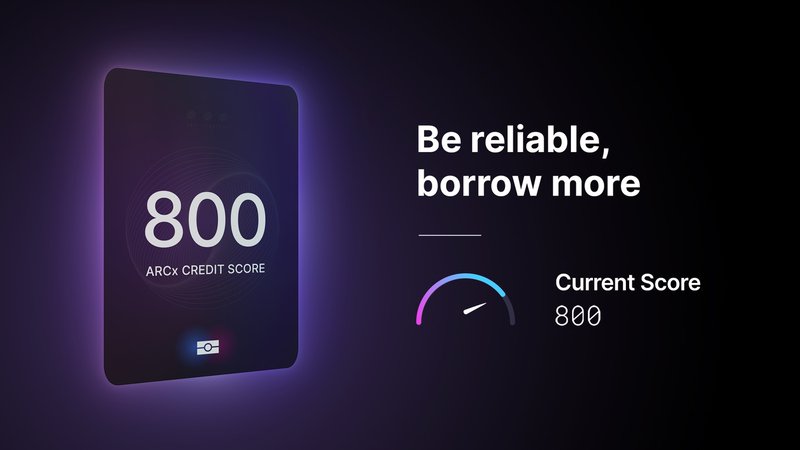
Lower balances relative to your limits—known as credit utilization—remain important for scoring. If you have a $10,000 limit, keep your outstanding debt well below that threshold. High utilization suggests over-leverage and increases your risk profile. Aim to keep utilization under 30% to demonstrate responsible borrowing habits to the protocol.
Algorithms favor wallets that show varied, stable financial behavior. Interact with multiple reputable lending protocols rather than relying on a single platform. This diversification reduces single-point-of-failure risks and provides a richer dataset for your credit profile. Consistent, cross-platform activity signals that you are an established and reliable participant in the DeFi ecosystem.
| Factor | Impact on Score | Recommended Action |
|---|---|---|
| Payment History | High | Repay loans before deadlines |
| Credit Utilization | Medium-High | Keep debt below 30% of limit |
| Activity Diversity | Medium | Use multiple reputable protocols |
Frequently asked questions about DeFi credit
The landscape of borrower identity is shifting rapidly as DeFi credit scores gain traction. Here are the most common questions regarding privacy, portability, and the mechanics of on-chain lending.
No comments yet. Be the first to share your thoughts!