Why traditional credit scores fail in web3
The current credit infrastructure was built for a paper-based economy, not a digital one. Centralized credit bureaus act as gatekeepers, controlling vast amounts of personal financial data while excluding millions who lack formal banking histories. This centralization creates two distinct failures: data privacy risks and systemic exclusion.
When you apply for a loan or rent an apartment, you are often forced to surrender sensitive information to multiple intermediaries. Each transfer increases the risk of data breaches and identity theft. These systems rely on legacy metrics like FICO scores, which do not capture the full picture of an individual's financial behavior. For the 25% of adults who are unbanked or "credit invisible," this model is a closed door.
In the context of decentralized identity, this exclusion is particularly acute. Traditional scores cannot verify on-chain activity, smart contract interactions, or decentralized finance (DeFi) participation. As a result, users with significant digital assets and transaction histories remain uncredentialed in the traditional financial system. Decentralized identity offers a way to shift control of data back to the user, allowing for verifiable credentials that don't rely on a single central authority.
The transition to on-chain credit requires a fundamental rethinking of how identity is verified. Instead of relying on third-party validators, decentralized systems enable self-sovereign identity, where users hold and share only the necessary proofs. This approach not only enhances privacy but also opens financial access to those previously ignored by traditional scoring models.
How decentralized identity works for lending
Traditional credit checks rely on a central authority to aggregate your financial history. Decentralized identity flips this model by giving you ownership of the data. You hold a Decentralized Identifier (DID) and a collection of Verifiable Credentials (VCs) in a secure wallet. When a lending protocol needs to assess your risk, you don't hand over your entire financial history or social security number. Instead, you present a cryptographically signed proof that you meet specific criteria, such as having a credit score above 700 or holding a certain amount of collateral.
This mechanism relies on zero-knowledge proofs or selective disclosure. A VC is issued by a trusted entity—like a bank, a credit bureau, or even a previous DeFi protocol—that verifies your attribute. Because the credential is signed by the issuer, the lending smart contract can trust the data without needing to contact the issuer again. You can prove you are solvent without revealing your total net worth, or prove you have been a borrower for two years without showing every transaction history. This preserves privacy while satisfying the underwriting requirements of on-chain lenders.
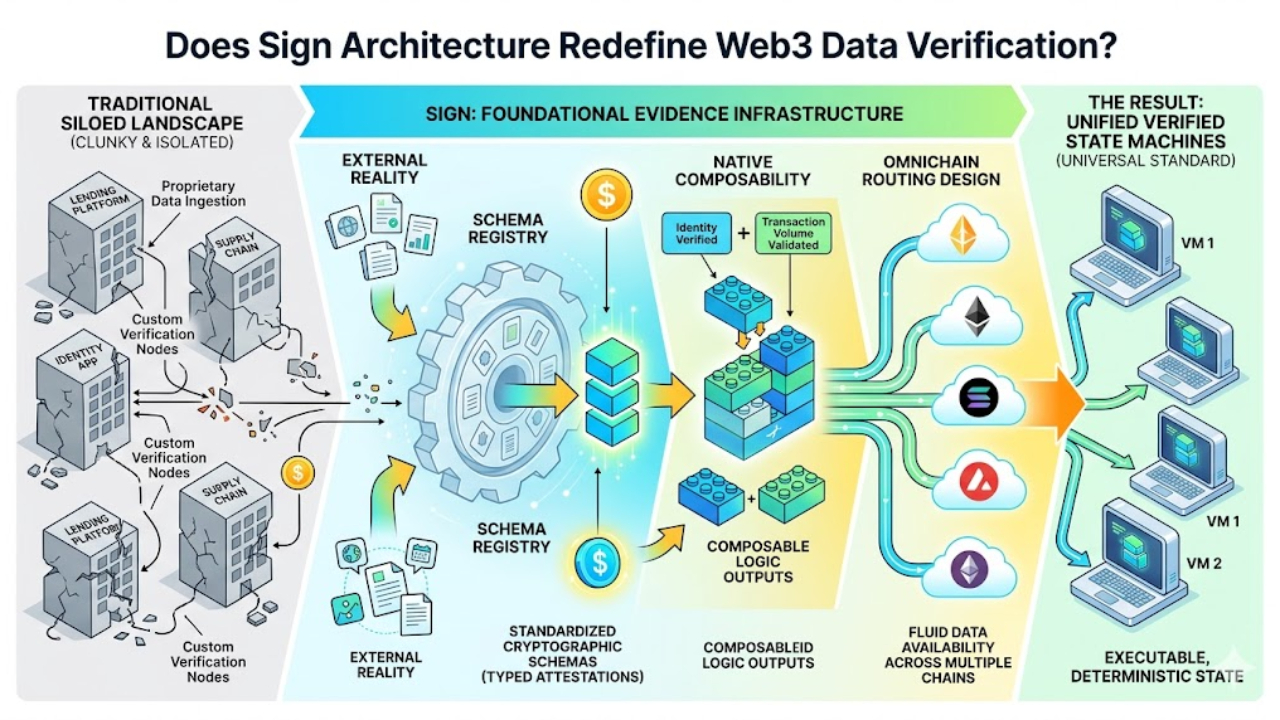
The growth of this infrastructure is closely tied to the broader decentralized finance (DeFi) ecosystem, where trustless verification is paramount. As on-chain lending markets mature, the ability to move reputation off-chain and bring it on-chain securely becomes a competitive advantage for protocols. The following chart illustrates the performance of a leading DeFi governance token, reflecting the underlying health and adoption of the decentralized lending infrastructure that supports these identity layers.
The lending workflow in practice
- Credential Issuance: A trusted issuer (e.g., a traditional bank or a DeFi protocol) verifies your off-chain or on-chain history and issues a signed VC to your wallet.
- Proof Generation: When applying for a loan, you generate a cryptographic proof from your VC that confirms you meet the lender's minimum requirements (e.g., "Credit Score > 700").
- Smart Contract Verification: The lending protocol’s smart contract validates the signature and the proof. If valid, it grants access to liquidity based on your verified attributes.
This process reduces the friction of credit underwriting. Lenders get a tamper-proof assessment of risk, and borrowers retain control over their sensitive personal data, aligning with the core principles of decentralized identity.
Top decentralized identity protocols for credit
The infrastructure supporting on-chain credit relies on a handful of protocols that prioritize verifiable credentials over traditional KYC databases. These decentralized identity protocols allow users to prove their creditworthiness without exposing their entire financial history. The following comparison highlights how leading providers handle privacy, interoperability, and lending integrations.
| Protocol | Privacy Feature | Interoperability | Lending Integrations |
|---|---|---|---|
| Polygon ID | Selective disclosure via zk-SNARKs | W3C VC standard | Polygon ID Lending, various DeFi protocols |
| Spruce ID | No data storage; verifier-controlled | W3C VC standard, DIDs | Login with Ethereum, dApp authentication |
| Civic | Zero-knowledge proofs for age/identity | W3C VC standard | Civic Lend, partnership with Polygon |
| uPort | User-held keys, selective sharing | W3C VC standard, DIDs | Historical identity layer, limited current lending |
| ENS | Domain-based identity resolution | On-chain ENS records | Collateral for loans, profile pictures |
Privacy is the primary differentiator. Protocols like Polygon ID and Civic use zero-knowledge proofs to allow users to prove they meet credit criteria (e.g., "over 18" or "credit score > 700") without revealing the underlying data. This selective disclosure is critical for on-chain credit, where transparency is often mistaken for necessity.
Interoperability standards, particularly W3C Verifiable Credentials (VCs), ensure that identity data issued by one protocol can be read by others. This reduces fragmentation, allowing a user’s credit reputation to move across different lending platforms without re-verification. Spruce ID and Civic are strong examples of this approach, focusing on open standards rather than walled gardens.
Lending integrations vary by maturity. ENS is widely used as a collateralizable asset and identity resolver, while Polygon ID and Civic have more direct lending product integrations. When evaluating decentralized identity protocols for credit, prioritize those with active lending partnerships and strong privacy features, as these directly impact user adoption and risk management.
Privacy-preserving credit scoring methods
Zero-knowledge proofs (ZKPs) allow users to prove they meet lending criteria without exposing their entire transaction history. This technology is the bridge between on-chain activity and off-chain creditworthiness. It enables a borrower to demonstrate solvency or income stability without revealing the specific addresses, amounts, or counterparties involved in their financial life.
The mechanism works by generating a cryptographic proof that validates a statement is true without disclosing the underlying data. For credit scoring, this means a smart contract can verify that a user’s credit score exceeds a threshold or that their debt-to-income ratio is acceptable. The lender receives only a binary pass/fail result, not a raw dump of the user’s financial records. This preserves privacy while maintaining the rigor of risk assessment.
Consider a borrower applying for a DeFi loan. Instead of connecting a wallet that exposes every swap and transfer, they submit a ZK-proof. This proof confirms they hold sufficient collateral or have a consistent repayment history on a compliant ledger. The protocol can then approve or deny the loan based on the proof’s validity. The user retains control over their data, sharing only what is necessary for the transaction.
This approach mitigates the privacy risks inherent in public blockchains. It prevents bad actors from analyzing on-chain behavior to target individuals or manipulate markets. By decoupling identity verification from data exposure, zero-knowledge proofs establish a standard for credit that respects user sovereignty.
Adoption challenges and regulatory hurdles
Decentralized identity is still finding its footing in a market that demands both security and simplicity. The primary friction point remains key management. For the average user, losing a private key means losing access to their entire digital life, a risk that centralized providers absorb but self-custodial models force users to bear alone. This user experience gap is the biggest barrier to mainstream adoption of on-chain credit systems.
Regulatory frameworks are also playing catch-up. The EU’s Markets in Crypto-Assets (MiCA) regulation introduces strict requirements for digital asset service providers, creating a complex compliance landscape for decentralized identity issuers. Additionally, interactions with the General Data Protection Regulation (GDPR) raise questions about the "right to be forgotten" in immutable ledgers. While decentralized identifiers (DIDs) offer privacy by design, they must navigate these conflicting legal expectations carefully.
The market’s reaction to these uncertainties is visible in the performance of major governance tokens. Investors are weighing the long-term potential of decentralized identity against the short-term regulatory risks.
No comments yet. Be the first to share your thoughts!