
Why on-chain history matters now
The 2026 crypto credit landscape is defined by a structural pivot from opaque centralized finance (CeFi) metrics to transparent, verifiable on-chain histories. Traditional credit scoring, reliant on centralized intermediaries and limited data points, fails to capture the full risk profile of crypto-native users. In contrast, creditworthiness is now derived from transaction history, not just wallet balance, allowing for under-collateralized lending. This shift enables a more robust and inclusive DeFi lending environment by rendering risk assessment based on actual behavioral data rather than static collateralization ratios.
This transition addresses a critical gap in risk assessment. As noted by legal scholars analyzing the intersection of finance and blockchain, crypto-native credit scoring aims to bridge the gap in risk assessment, rendering DeFi lending more robust and inclusive. By leveraging public ledger data, protocols can now evaluate a user's repayment history, liquidity provision, and interaction patterns across multiple chains. This granularity allows lenders to offer terms that better reflect individual risk, moving beyond the one-size-fits-all overcollateralization model that has long dominated decentralized finance.
The regulatory implications of this shift are significant. Financial authorities are increasingly scrutinizing the transparency of these on-chain metrics to ensure compliance with anti-money laundering (AML) and know-your-customer (KYC) standards. The move toward verifiable histories provides a clear audit trail, reducing the systemic risks associated with hidden leverage and opaque counterparty relationships. Consequently, the industry is seeing a rise in protocols that prioritize these verifiable histories, aligning financial innovation with regulatory expectations for transparency and accountability.
As the market matures, the distinction between traditional and on-chain credit is becoming less about technology and more about data integrity. Protocols that successfully integrate these histories are positioned to capture a larger share of the under-collateralized lending market, offering competitive rates to users with proven track records. This evolution marks a fundamental change in how creditworthiness is determined in the digital asset space, setting a new standard for financial inclusion and risk management.
DeFi credit protocols in 2026
The transition to on-chain credit scoring represents a structural shift from identity-based verification to reputation-based assessment. In 2026, DeFi credit protocols no longer rely on traditional FICO scores or centralized identity documents. Instead, they utilize on-chain activity to generate a dynamic credit profile. This model removes the friction of lengthy approval processes, allowing borrowers to access liquidity based on verifiable financial history rather than institutional gatekeeping.
These protocols function by analyzing transaction history, asset holdings, and repayment behavior across decentralized finance (DeFi) applications. The resulting score is not a static number but a living metric that updates in real-time. This transparency allows lenders to price risk more accurately, while borrowers benefit from a portable reputation that follows them across different platforms. The mechanism is akin to a digital ledger of trust, where every interaction contributes to a more robust creditworthiness profile.
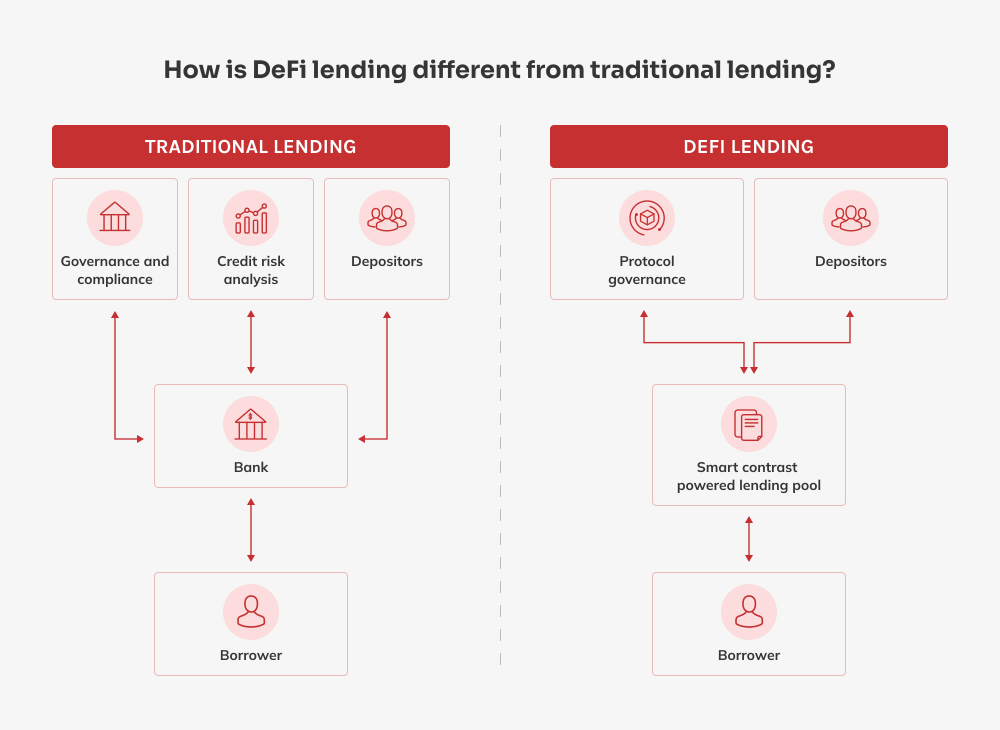
To understand the divergence between legacy systems and emerging on-chain infrastructure, it is necessary to compare their operational mechanics. Traditional centralized finance (CeFi) lending relies on opaque internal models and rigid collateral requirements. In contrast, DeFi credit protocols offer greater transparency and flexibility, leveraging smart contracts to automate risk assessment and execution.
| Feature | Traditional CeFi Lending | DeFi Credit Protocols |
|---|---|---|
| Score Basis | Credit Bureau Data | On-Chain Transaction History |
| Transparency | Opaque Internal Models | Public Smart Contract Logic |
| Collateral Type | Cash, Securities, Real Estate | Crypto Assets, Tokenized Real-World Assets |
| Approval Speed | Days to Weeks | Minutes to Hours |
| Reputation Portability | Platform-Specific | Cross-Protocol Standardized |
The implications for market analysis are significant. As on-chain credit becomes more standardized, the distinction between traditional finance and decentralized finance will continue to blur. This convergence is driven by the need for efficient capital allocation and the demand for more inclusive financial services. For institutional investors, understanding these protocols is essential for assessing risk in an increasingly interconnected financial landscape.
Bitcoin-backed lending trends
Borrowing against Bitcoin has shifted from a speculative retail activity to a structural component of institutional liquidity management. By leveraging on-chain credit protocols, market participants can access capital without triggering taxable events or depleting core holdings. This mechanism effectively decouples asset ownership from liquidity needs, allowing investors to maintain exposure to Bitcoin’s appreciation while utilizing borrowed funds for other strategic purposes.
The integration of on-chain credit scoring has significantly lowered the barriers to entry. Traditional lending models relied heavily on off-chain financial history, often excluding users with limited credit footprints. In contrast, modern protocols analyze on-chain transaction history and collateralization ratios to determine creditworthiness. This data-driven approach removes the friction of lengthy approval processes, enabling faster capital deployment and more responsive risk management.
Institutional adoption is accelerating as prime infrastructure matures. Galaxy Digital and other major market participants are increasingly integrating on-chain credit lines into their balance sheet management strategies. This trend reflects a broader acceptance of crypto-native assets as viable collateral within formal financial frameworks, signaling a maturation of the market toward more robust, regulatory-compliant lending practices.
Institutional adoption and regulation
The integration of crypto credit scores into traditional financial infrastructure marks a structural shift in how institutional players assess risk. This transition is no longer speculative; it is becoming a prerequisite for liquidity. Major credit reporting agencies are beginning to bridge the gap between off-chain identity and on-chain activity. For instance, TransUnion has initiated programs to deliver traditional credit scores for individuals applying for loans on blockchain-based protocols, ensuring that historical financial behavior informs decentralized lending decisions without compromising privacy.
Regulatory frameworks are simultaneously tightening, demanding greater transparency in how these scores are calculated. The 2026 Crypto Crime Report by Chainalysis highlights the increasing sophistication of illicit activities, underscoring the need for robust on-chain monitoring. Institutional adoption of crypto credit scores is largely driven by the necessity to comply with these evolving standards. By integrating verified on-chain data, institutions can better identify bad actors and mitigate fraud, creating a more secure environment for large-scale capital deployment.
This convergence of regulatory pressure and institutional demand is reshaping the market. The ability to translate on-chain activity into a recognizable credit metric allows for seamless integration with traditional banking systems. As these protocols mature, the distinction between "crypto-native" and "traditional" credit will likely blur, creating a unified landscape where reputation is verified through immutable ledger data. The following widget tracks the broader market sentiment surrounding institutional crypto adoption, reflecting the growing confidence in these regulated frameworks.
Frequently asked questions about on-chain credit
How is an on-chain credit score calculated? Unlike traditional FICO models that rely on credit card payment history, on-chain credit scores are derived from wallet reputation and historical DeFi activity. Platforms analyze transaction history, collateralization ratios, and repayment behavior across decentralized protocols to generate a risk profile. This data is typically aggregated by analytics firms like Chainalysis to ensure audit compliance and reduce reliance on subjective social sentiment.
Can I use my DeFi history for TradFi loans? Currently, portability between on-chain and traditional finance is limited. While on-chain credit enables under-collateralized lending within DeFi ecosystems, most traditional financial institutions do not yet accept blockchain transaction history as primary evidence for creditworthiness. The structural shift toward regulatory-compliant identity verification is ongoing, but widespread interoperability remains a future development rather than a current standard.
Is on-chain credit secure? On-chain credit relies on cryptographic proof and smart contract execution, which provides a transparent and immutable record of financial behavior. However, security depends on the integrity of the underlying protocols and the accuracy of the data aggregation layer. Users must ensure they are interacting with audited smart contracts and reputable data providers to mitigate risks associated with oracle failures or protocol exploits.
No comments yet. Be the first to share your thoughts!