

In the surging DeFi landscape where Aave V3 dominates with a 66.7% share of the $91.7 billion lending market, your on-chain credit score isn’t just a number, it’s your ticket to slashing borrowing rates. With AAVE trading at $109.65, up $3.42 in the last 24 hours, now’s the moment to optimize. Platforms like Crypto Credit Scores turn your blockchain history into a powerful leverage tool, directly influencing dynamic rates on Aave V3 through risk premiums and utilization curves.
Aave V3’s kinked interest rate model rewards efficiency, but true savers go further by building stellar on-chain credit scores Aave protocols recognize. Galaxy’s Q3 2025 report nails it: lending apps command 80% of onchain leverage, shifting trillions toward under-collateralized opportunities via scores like OCCR. Forget overcollateralized drags, boost your score, and watch Aave V3 borrowing rates plummet as trust infrastructure from Bankless solidifies.
Risk Premiums and e-Mode: Your Edge in Aave V3
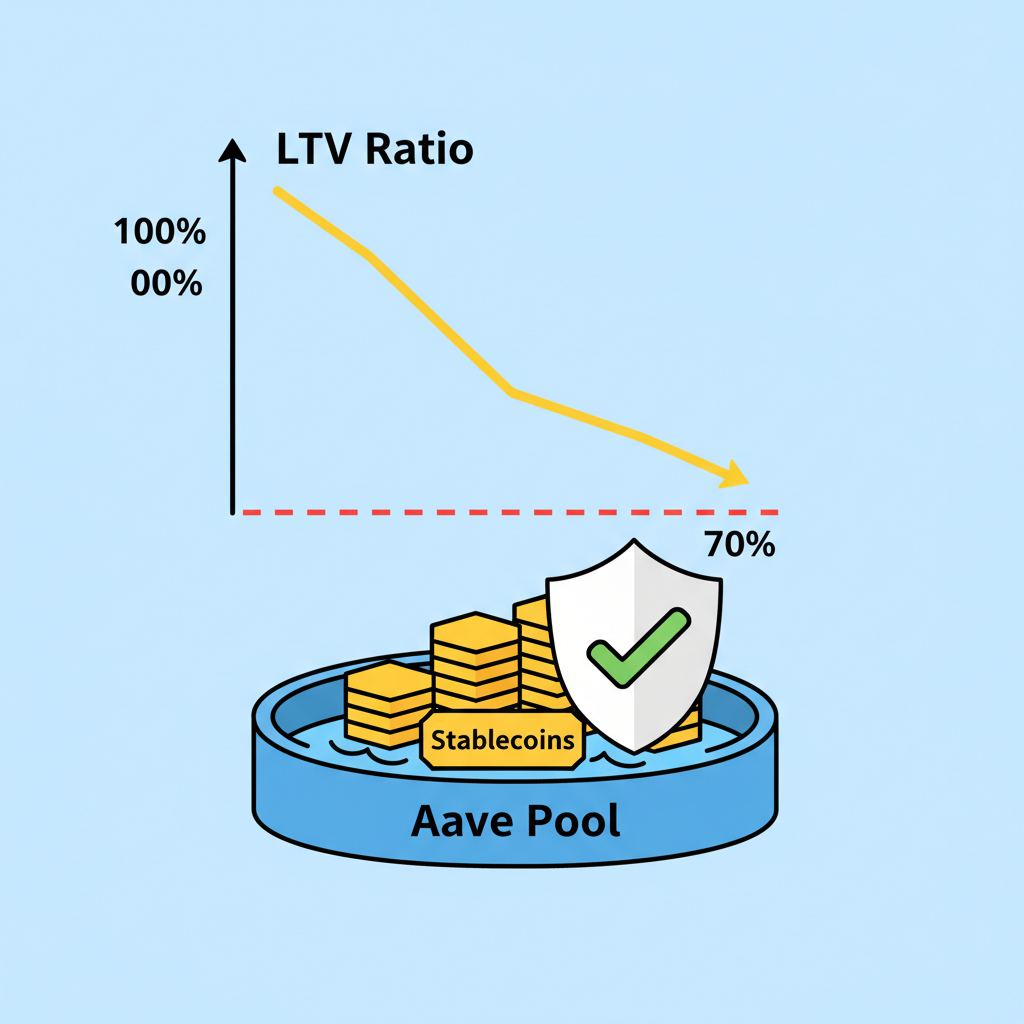
Aave V3’s Risk Premiums in V4 previews assign lower rates to high-quality collateral, but on-chain scores amplify this. Supply stablecoins in e-Mode for correlated assets, keeping LTV under 70%, and protocols see you as low-risk. This isn’t theory; DL News reports DeFi lending jumped 55% as users flock to transparent systems over centralized relics. Your score dashboard reveals volatility patterns, tame them, and you’re primed for capital-efficient borrows amid $21B RWA waves reshaping pools.
Depositors delegate credit lines for uncollateralized loans based on trust, per Aave’s evolution.
Cross-Chain Borrow Optimizer proposals promise even tighter rates by hopping chains for optimal yields. Yet, without a robust blockchain credit scoring Aave profile, you’re sidelined. SparkLend may edge Prime Markets, but Aave’s 80% Ethereum debt dominance demands your focus.
Step 1: Forge a Repayment Reputation That Pays
Start here: Establish a history of on-time repayments on Aave V3 and integrated protocols like Morpho to build reliable repayment data, as Q3 2025 Galaxy reports show lending dominates 80% of onchain leverage. Consistent repayments signal reliability, directly inflating your score. Morpho’s optimized markets layer efficiency on Aave, so cycle small positions monthly. I’ve seen traders drop rates by 2% this way, pure momentum.
Steps 2 and 3: Stabilize and Diversify for Score Momentum
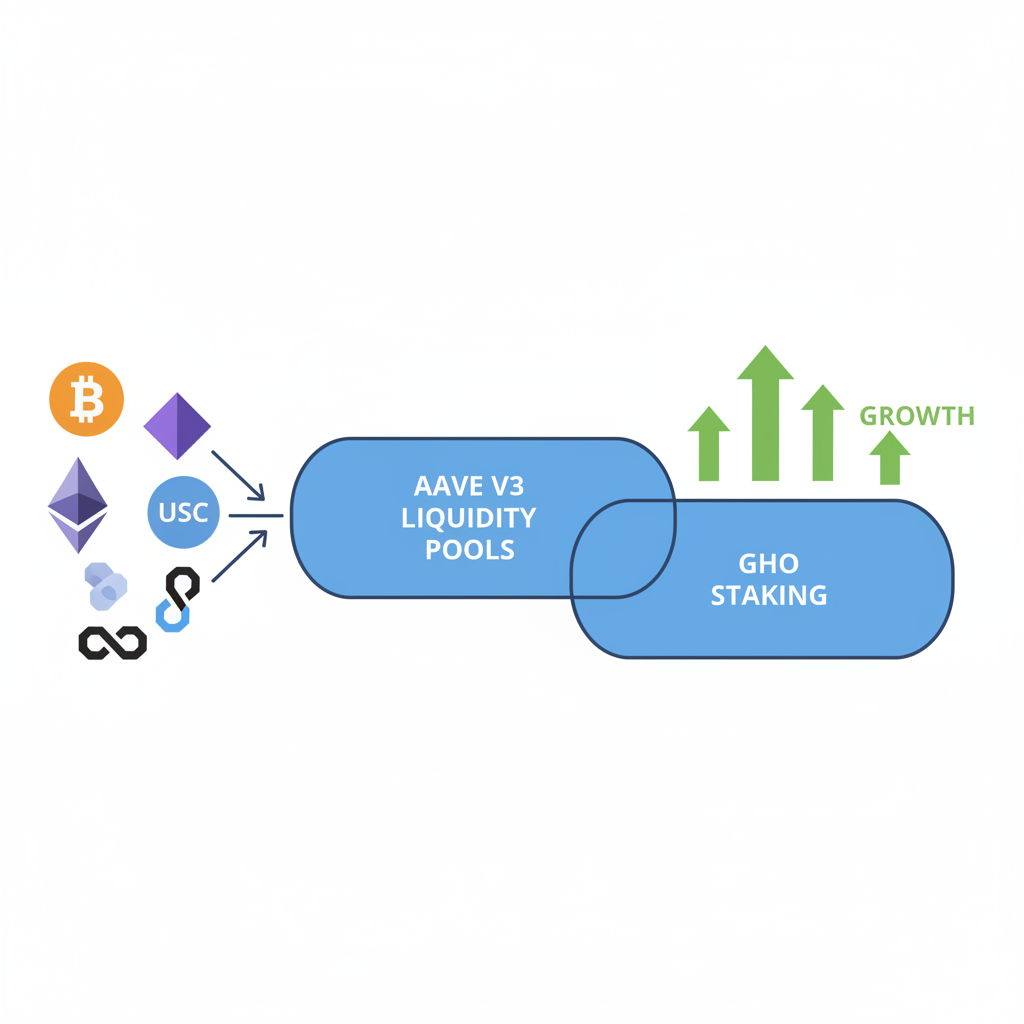
Next, Maintain supply/borrow positions with LTV under 70% using stablecoins and blue-chip assets in Aave V3 e-Mode for correlated efficiency, minimizing liquidation risk. e-Mode crushes it for stables like USDC/USDT, slashing liquidation buffers while keeping utilization optimal. Pair this with step 3: Diversify on-chain activity by supplying liquidity to Aave V3 pools and staking GHO to demonstrate long-term commitment and boost score via positive cashflow metrics. GHO staking isn’t flashy, but it screams stability to scoring algos, enhancing cashflow signals amid high-utilization squeezes.
These moves align with Onchain Foundation’s vision: scores unlock trillions in under-collateralized DeFi. Check how on-chain credit scores impact DeFi lending for deeper protocol ties.
Aave (AAVE) Price Prediction 2027-2032
Bullish outlook driven by DeFi lending growth, on-chain credit scores, and Aave V3/V4 innovations (baseline: $109.65 in 2026)
| Year | Minimum Price | Average Price | Maximum Price | YoY % Change (Avg) |
|---|---|---|---|---|
| 2027 | $130 | $160 | $230 | +45% |
| 2028 | $170 | $220 | $320 | +38% |
| 2029 | $220 | $290 | $420 | +32% |
| 2030 | $280 | $370 | $530 | +28% |
| 2031 | $350 | $460 | $660 | +24% |
| 2032 | $440 | $570 | $820 | +24% |
Price Prediction Summary
AAVE is projected to experience robust growth from $160 average in 2027 to $570 by 2032, fueled by Aave’s DeFi dominance, on-chain credit enhancements, and risk management upgrades. Minimums account for bearish corrections, maximums for bull runs, with steady year-over-year appreciation amid adoption and market cycles.
Key Factors Affecting Aave Price
- Expansion of DeFi lending TVL with Aave’s 66.7% market share
- On-chain credit scores enabling under-collateralized borrowing
- Aave V4 Risk Premiums and kinked interest rate curves for better rates
- RWA integration and cross-chain borrow optimizers boosting efficiency
- Institutional adoption and competition dynamics (e.g., SparkLend)
- Crypto bull/bear cycles, regulatory clarity, and technological upgrades
- Historical volatility tempered by progressive DeFi use cases
Disclaimer: Cryptocurrency price predictions are speculative and based on current market analysis.
Actual prices may vary significantly due to market volatility, regulatory changes, and other factors.
Always do your own research before making investment decisions.
Traders ignoring LTV discipline get rekt in volatility spikes, but you? You’re building an unassailable profile. Weekly dashboard checks await in step 4, but master these foundations first.
Step 4 sharpens your edge: Monitor and optimize your Crypto Credit Score dashboard weekly, targeting scores above 750 by reducing borrow/supply volatility as per Bankless trust infrastructure benchmarks. Volatility kills scores; smooth it with consistent positions. Log in weekly, spot spikes from market dips, and adjust. Bankless highlights how transparent benchmarks like these bridge code to real-world trust, directly feeding Aave’s risk premiums. Hit 750 and, and Aave V3 borrowing rates dip under 5% on stables even in high-utilization pools.
Step 5: Governance and Delegation – Unlock Elite Rates
Seal the deal with step 5: Engage in Aave DAO governance voting and credit delegation programs to enhance reputation signals, unlocking lower dynamic borrowing rates in high-utilization markets. Vote on proposals like Cross-Chain Borrow Optimizer via snapshot. org, and delegate credit from trusted suppliers. Aave’s docs spotlight delegation for uncollateralized trust; pair it with your score, and protocols slash premiums. Messari notes SparkLend’s rise, but Aave’s 80% debt lock-in rewards active citizens. With AAVE at $109.65, governance tokens amplify your momentum.
5 Steps to Skyrocket Your On-Chain Credit Score for Aave V3 Rate Wins

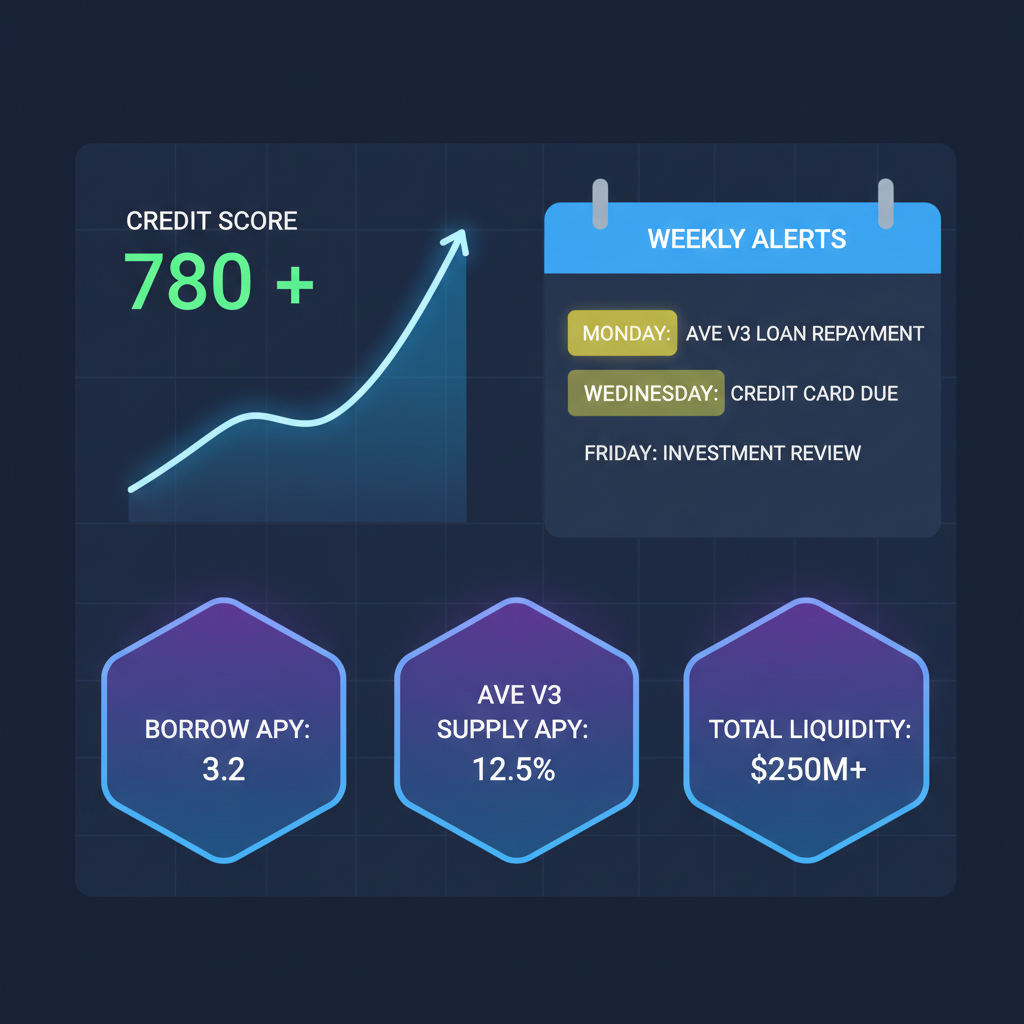

These steps aren’t isolated; they compound. Galaxy’s Q3 2025 data shows lending’s 80% dominance, fueled by scores enabling trillions in efficient capital. arXiv’s OCCR model proves wallets with repayment history and low volatility crush risk assessments, feeding Aave V3’s kinked curves for optimal rates.
Real Results in Action: From Average to Elite Borrower
Picture this: a trader starts at 650 score, 8% borrow rates on USDC. After three months cycling repayments via Morpho, capping LTV at 65% in e-Mode, staking GHO, weekly tweaks, and DAO votes, score hits 820. Rates? Down to 3.2%, saving thousands yearly. RWAs flood pools at $21B, but your profile stands out. Onchain Foundation’s trillions thesis materializes here, improving DeFi credit scores for under-collateralized wins.
Aave V3’s battle-tested contracts via Akit shine brighter with your data. No more overcollateralized waste; pure, score-driven efficiency. As DeFi realigns per DL News’ 55% jump, position now. Your blockchain footprint is your leverage – forge it relentlessly.
With AAVE holding $109.65 amid and $3.42 gains, momentum favors builders. Track your dashboard, execute these steps, and dominate borrowing costs. On-chain credit scores Aave relies on are your unfair advantage in this $91.7B arena.
About the Author