
Imagine borrowing in DeFi at rates that rival traditional finance, all powered by your blockchain footprint. On Ethereum, where on-chain credit scores are gaining traction, users with strong profiles secure DeFi borrowing rates on Ethereum as low as 2-4% APY on platforms like Aave V3. With ETH at $1,966.38, up a modest and 0.000100% in the last 24 hours, the network's $30 billion in lending deposits underscores its dominance.
Over-collateralization has long gated DeFi's potential, forcing everyone into the same high-risk box. Protocols like Cred Protocol and ARCx flip this script. Cred scores wallets from 300 to 1000 based on repayment history, asset diversity, and protocol interactions. Higher scores mean lenders offer lower borrowing rates and dynamic LTVs, boosting capital efficiency without spiking defaults.
On-Chain Scores Slash Costs and Risks
Ethereum's lending markets, led by Aave V3's $23.6 billion deposits, thrive on data-driven trust. Borrowers with proven on-chain credit scores access personalized terms: think 60% LTV instead of 50%, or rates dropping below supply APYs. Galaxy Research highlights Ethereum's 81% share of EVM lending, yet on-chain scoring promises trillions more liquidity per Onchain Foundation insights.
On-chain credit scoring bridges traditional lending with DeFi, creating transparent ecosystems soon to dominate risk assessment.
Lenders price risk precisely, users borrow more efficiently. Keyrock's guide on credit strategies notes protocols like Spectral Finance feeding scores into asset management, aligning fees with performance. For you, this means improving your crypto credit score directly cuts costs on ETH or USDC loans.
Six Strategies to Build Elite Ethereum DeFi Lending Scores
To unlock these advantages, focus on proven behaviors tracked by Ethereum DeFi lending scores. Platforms analyze your wallet's full history, rewarding reliability over speculation. Here's how to start strong with the first three tactics.
- Establish Repayment History: Borrow small amounts on Aave V3 - say $100 USDC - and repay early or on-time repeatedly. This signals reliability to scorers like Cred Protocol, building a foundation for higher scores and better rates over 3-6 months.
- Maintain Conservative LTV Ratios: Keep loans under 50% LTV using ETH at $1,966.38 or stablecoins like USDC. Avoiding liquidations proves discipline, key for protocols adjusting dynamic LTVs based on your profile.
- Diversify On-Chain Activity: Interact consistently with top Ethereum protocols like Compound and Uniswap. Regular swaps, supplies, and borrows show broad, positive engagement, elevating behavioral scores without red flags.
These steps compound quickly. GARP's risk management report affirms on-chain profiles enable tiered rates and leverages, mirroring TradFi but transparently. 8lends details how blockchain data cuts collateral needs, widening access.
Boost Your On-Chain Credit: 3 Steps to Lower DeFi Rates on Ethereum

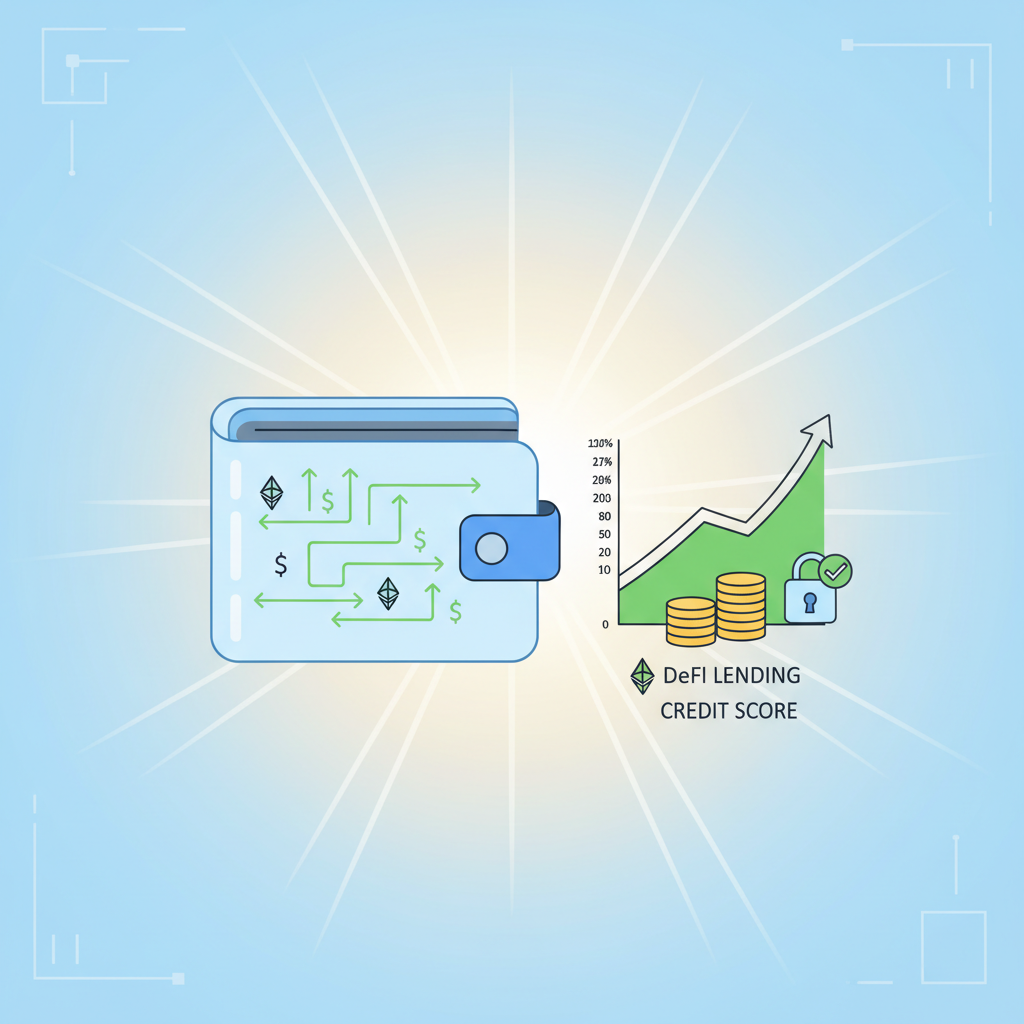
Finally, leverage oracles like Spectral Finance or Cred Protocol to monitor metrics in real-time. Active improvement turns average wallets into prime borrowers, per Medium's Duredev on risk futures. With Ethereum's lending TVL surging, your optimized score positions you ahead.
Building on these foundations, the next three strategies elevate your profile to elite status, directly impacting DeFi borrowing rates on Ethereum.
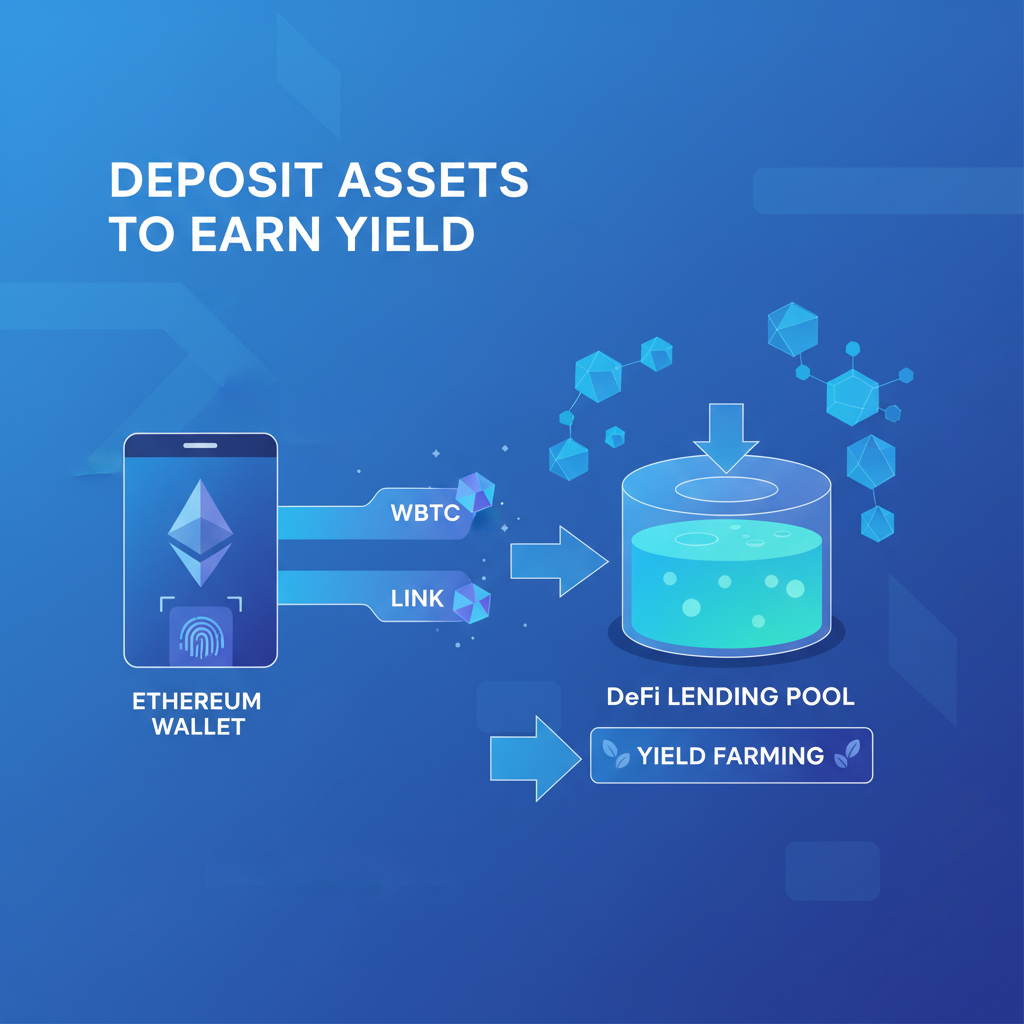
- Use High-Quality Collateral: Deposit blue-chip assets like WBTC or LINK instead of volatile tokens. These holdings signal stability to scorers, stabilizing your score and unlocking higher LTVs on Aave or Compound without liquidation threats.
- Avoid Risky Patterns: Steer clear of frequent small transfers or mixer use. Focus on transparent wallet behavior; clean histories impress protocols, preventing score penalties from perceived risk.
- Leverage Credit Score Oracles: Integrate with platforms like Spectral Finance or Cred Protocol. Actively monitor and tweak metrics, turning data into action for rapid crypto credit score gains.
6 Strategies to Build On-Chain Credit Score for Lower DeFi Borrowing Rates
| Strategy | Key Action | Impact on Score | Example Protocols |
|---|---|---|---|
| 1. Establish Repayment History | Borrow small amounts on Aave V3 and repay early/on-time repeatedly | Signals reliability and builds positive repayment history | Aave V3 |
| 2. Maintain Conservative LTV Ratios | Keep loans under 50% LTV using ETH or stablecoins like USDC | Avoids liquidations, demonstrates low-risk behavior | Aave, Compound |
| 3. Diversify On-Chain Activity | Interact consistently with top Ethereum protocols | Generates positive behavioral scores through diversification | Compound, Uniswap |
| 4. Use High-Quality Collateral | Deposit blue-chip assets (WBTC, LINK) over volatile tokens | Boosts score stability with high-quality assets | Aave, Compound |
| 5. Avoid Risky Patterns | Steer clear of frequent small transfers or mixer use | Promotes transparent wallet behavior, reduces risk flags | General wallet protocols |
| 6. Leverage Credit Score Oracles | Integrate with platforms like Spectral Finance or Cred Protocol | Actively monitors and improves key credit metrics | Spectral Finance, Cred Protocol |

Execute these religiously, and watch your Ethereum DeFi lending scores climb. Kava. io's AI-powered models show transparent on-chain data slashing collateral needs by 20-30%, while Galaxy's yield guide ties scores to optimized returns in lending and restaking.
Real-World Wins and Future Momentum
Traders I've coached report 1-2% APY drops within months. One swung ETH at $1,966.38 into Aave borrows under 3% after six months of disciplined play. SJSU research validates oracle integrations cutting compute costs, securing Ethereum's edge. Rapid Innovation predicts sophisticated models dominating interfaces soon.
AMINA Bank's DeFi maturation thesis rings true: yields tracking TradFi rates, bolstered by scores averting cascades. Onchain Foundation eyes trillions in liquidity as lenders link scores to primary debt markets.
Risk-averse yet aggressive? Stack these habits. Your wallet becomes a momentum machine, converting blockchain proof into prime borrower status. With Ethereum's $30 billion TVL anchor, optimized scores mean borrowing ETH or USDC cheaper than ever, fueling swings and yields alike.
Keyrock's asset management lens reveals protocols rewarding performance-aligned fees. Duredev's vision of unified ecosystems materializes as you act. Momentum is opportunity- seize it on-chain.




No comments yet. Be the first to share your thoughts!