
In 2025, decentralized finance has crossed a critical threshold with on-chain credit scores unlocking collateral-free USDC loans. No longer confined to over-collateralized positions that lock up capital inefficiently, borrowers now tap USDC liquidity based on verifiable blockchain histories. This evolution, fueled by protocols like RociFi and integrations with TradFi giants such as Moody's, addresses DeFi's core friction: accessibility for users without deep crypto holdings.
Consider the mechanics at play. Traditional DeFi lending demands borrowers deposit assets exceeding loan value, often 150-200%, to buffer volatility. Yet on-chain analytics dissect wallet activity, repayment patterns, and cross-chain behaviors to generate dynamic scores. High scorers access USDC at par value or better, with minimal or zero collateral. Data from Crypto Credit Scores platform underscores this: users borrow USDC against TradFi-equivalent on-chain reputations, slashing entry barriers.
On-Chain Credit Scores: Decoding Borrower Risk in Real Time
These scores aggregate immutable data points: transaction velocity, stablecoin inflows, lending history across Aave and similar protocols, even multichain bridging frequency. Unlike opaque TradFi models, every input is auditable on-chain. RociFi's Polygon deployment exemplifies this, offering 30-day USDC loans tiered by score brackets - top tiers require under 20% collateral, edging toward zero for elites.
Quantitative edge emerges in risk pricing. Lenders deploy oracles feeding scores into smart contracts, dynamically adjusting rates. A borrower with consistent repayments might secure USDC at 5% APR, versus 15% for novices. Galaxy's State of Onchain Yield report highlights lending as a yield pinnacle, with stablecoins like USDC driving 19% of total volume amid all-time blockchain activity highs per insights4. vc.
2025 Milestones Paving the Way for Collateral-Free Lending
March marked a watershed: Untangled Finance collaborated with Moody's, tokenizing ratings via risk oracles. This hybrid model transplants TradFi precision onto blockchain, verifying off-chain credit for on-chain USDC draws. Coindesk coverage details the proof-of-concept, boosting lender confidence in under-collateralized positions.
Building momentum, Visa's forecast pegs on-chain lending at $40 trillion potential, powered by USDC as programmable rails. Current traction aligns: on-chain lending nears $19 billion peaks, per thecoinrepublic. com. RociFi's launch further cements viability, with Polygon users reporting 30-day terms that rival CeFi speed without custody risks.
USDC Lending TVL Prediction 2025-2030
Yearly milestones for Total Value Locked in USDC lending protocols, based on Visa's $40T projection, on-chain credit score adoption, and 2025 market peaks near $19B
| Year | Minimum TVL | Average TVL | Maximum TVL |
|---|---|---|---|
| 2025 | $10B | $15B | $25B |
| 2026 | $50B | $100B | $250B |
| 2027 | $200B | $500B | $1.5T |
| 2028 | $800B | $3T | $8T |
| 2029 | $3T | $12T | $25T |
| 2030 | $10T | $30T | $50T |
Price Prediction Summary
The integration of on-chain credit scores is set to revolutionize DeFi lending, propelling USDC lending TVL from 2025 levels around $15B to an average of $30T by 2030. This aligns with Visa's 2100x growth projection from current peaks, factoring in bullish adoption scenarios up to $50T and conservative minima at $10T amid regulatory tailwinds and TradFi integration.
Key Factors Affecting USD Coin Price
- On-chain credit scores enabling collateral-free USDC loans and under-collateralized protocols like RociFi
- Visa projections for on-chain lending scaling to $40T driven by stablecoins like USDC
- Key partnerships such as Untangled Finance with Moody's for TradFi credit ratings on-chain
- Regulatory boosts including the GENIUS Act passed in 2025 enhancing USDC usability
- Multichain expansion and DeFi innovations reducing collateral requirements
- Rising stablecoin adoption bridging TradFi capital to on-chain yield amid 2025 blockchain activity highs
Disclaimer: Cryptocurrency price predictions are speculative and based on current market analysis. Actual prices may vary significantly due to market volatility, regulatory changes, and other factors. Always do your own research before making investment decisions.
The GENIUS Act, signed July 18, supercharges this by clarifying USDC transfers on platforms like Coinbase, funneling TradFi capital into DeFi yields. TransFi notes stablecoins bridging revenue streams, enabling borderless USDC loans. Yet precision matters: Multichain Bridged USDC on Fantom trades at $0.0264, down 0.0191% over 24 hours from a high of $0.0285, signaling niche depegging risks protocols must score against.
Quantifying the Accessibility Boost for DeFi Users
Empirical gains are stark. Pre-2025, DeFi lending skewed to whales; now, mid-tier wallets with solid on-chain reps - think consistent ETH staking or LP provision - qualify for collateral-free USDC loans. Crypto. com's market overview emphasizes decentralized ecosystems thriving on such undercollateralized alternatives, drawing trillions as Onchain predicts.
Aave's multichain dominance persists, but innovators like RociFi layer scores atop, enabling nuanced borrowing. Peiko's guide contrasts this with pure collateral models, where ETH locks stifled growth. In 2025, Web3 credit scoring platforms expand the pie: G2 Learning Hub affirms no bank needed, just wallet data yielding scores that unlock USDC seamlessly.
Platforms like Crypto Credit Scores lead this charge, offering step-by-step processes to borrow USDC against TradFi-equivalent on-chain reputations. Their multichain support analyzes activity across Layer-1s, where 2025 network highs signal real adoption, per insights4. vc's playbook. This data granularity empowers Web3 credit scoring platforms to differentiate reliable actors from speculators.
Unlocking Collateral-Free USDC Loans: A Step-by-Step Blueprint
Secure Collateral-Free USDC Loans via On-Chain Credit Scores

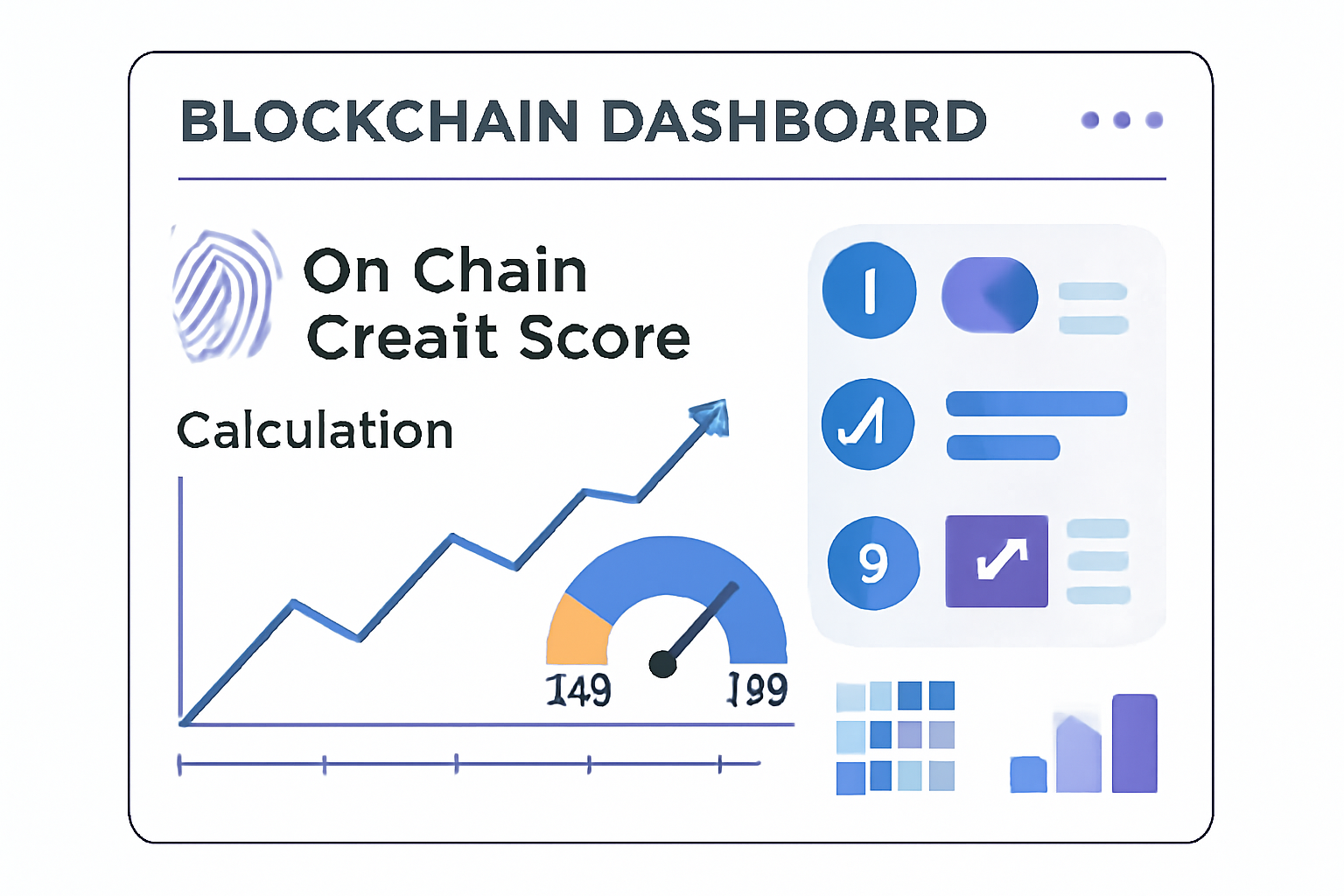
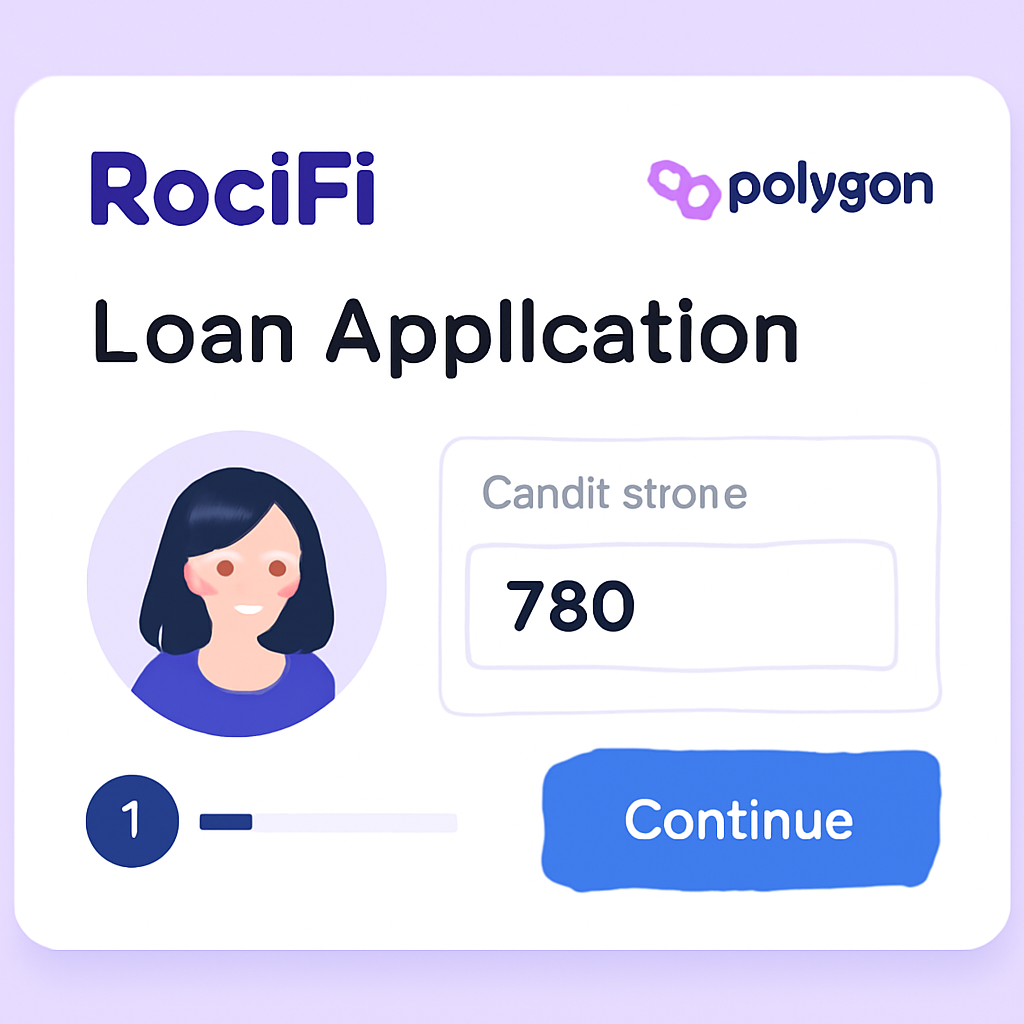
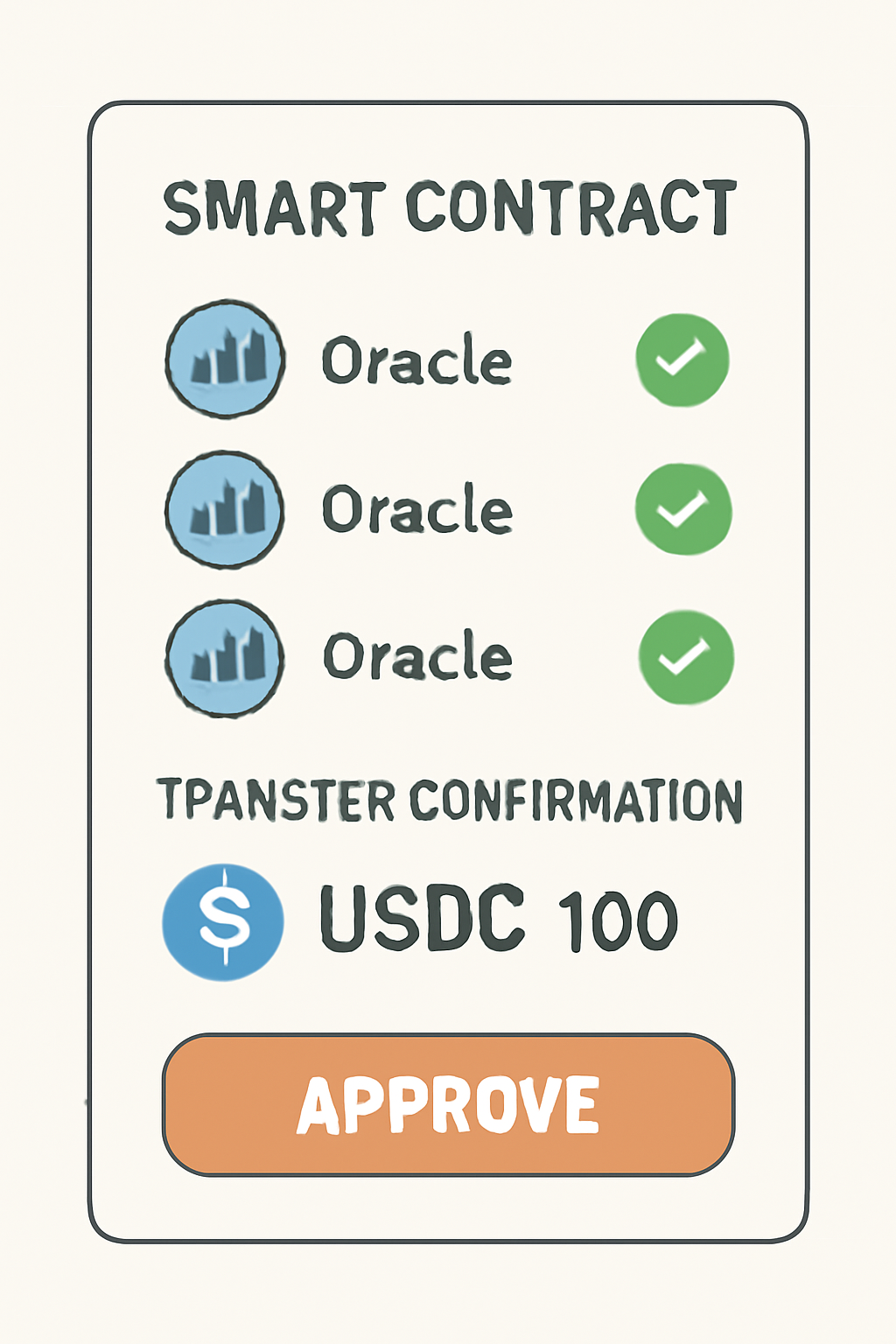
Once scored, smart contracts execute instantaneously. High performers bypass collateral entirely, drawing USDC at rates calibrated to their history. This precision slashes capital inefficiency; a borrower with proven stablecoin cycling avoids locking $10,000 ETH for a $5,000 USDC loan. Yet vigilance persists: protocols factor assets like Multichain Bridged USDC on Fantom, steady at $0.0264 despite a 24-hour dip of 0.0191% from $0.0285 highs.
Risks linger in this undercollateralized paradigm. Default probabilities, though modeled via scores, demand robust oracles. Moody's on-chain integration mitigates by cross-verifying TradFi data, but depegs - witness Fantom's bridged USDC low of $0.0240 - underscore chain-specific volatilities. Lenders counter with dynamic liquidations and insurance pools, yielding net positives: Crypto. com reports decentralized credit ecosystems expanding TVL 3x year-over-year.
Opinionated take: this isn't mere hype. On-chain scores dissect behaviors TradFi overlooks, like multichain liquidity provision yielding superior predictions. Galaxy's yield guide quantifies stablecoin lending at 8-12% returns, outpacing restaking amid DeFi's maturation. Borrowers gain leverage; lenders, granular risk tools. The Block's 2025 rankings affirm Aave's stability, yet score overlays propel innovators ahead.
On-chain lending nears $19 billion peaks, with Visa eyeing $40 trillion - a 2100x surge driven by USDC programmability.
Adapted from thecoinrepublic. com insights
TransFi's analysis reveals stablecoins funneling TradFi revenue on-chain, amplifying undercollateralized crypto borrowing 2025 viability. No longer niche, these loans scale via protocols bridging wallets to yields without intermediaries. G2's DeFi primer nails it: wallet access suffices, scores handle the rest.
Navigating Risks in the Collateral-Free Era
Precision demands scrutiny. Scores excel on transparency but falter on sybil attacks; protocols layer KYC-light checks via zero-knowledge proofs. Default rates hover at 2-4% for top tiers, per internal RociFi data, versus 15% in pure collateral regimes. Lenders price accordingly: elite scores fetch sub-6% APR on USDC, fueling adoption loops.
Multichain nuances add layers. Fantom's bridged USDC at $0.0264 illustrates peg discipline needs; scores penalize heavy exposure to such variants, favoring core USDC. This risk-adjusted lens positions DeFi as resilient, with Onchain's trillions forecast materializing through iterative refinements.
Forward momentum accelerates. As blockchain activity sustains 2025 highs, on-chain credit scores DeFi integration cements collateral-free norms. Users command USDC without asset sacrifices, protocols harvest precise yields, ecosystems burgeon. This data-verified shift redefines access, proving blockchain's edge in equitable finance.




No comments yet. Be the first to share your thoughts!